RF Scanners
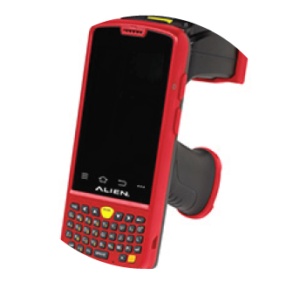
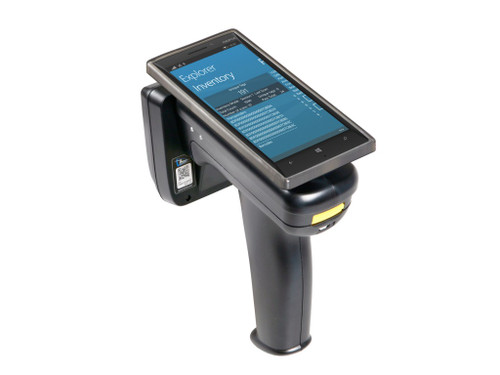
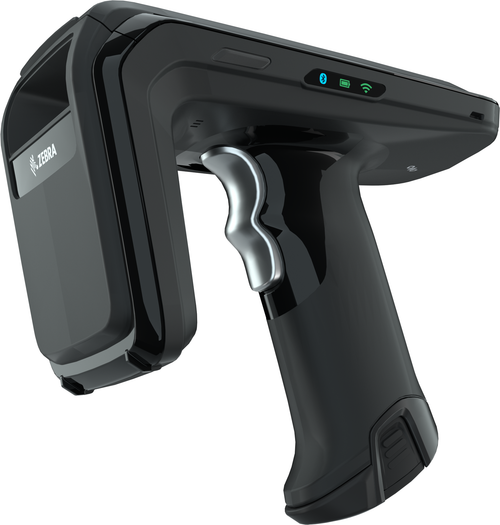
Find professional-grade RF scanners designed for accurate data collection and real-time inventory tracking across warehouses, retail locations, and industrial environments. Our wireless RF scanning solutions deliver reliable performance with extended battery life, ergonomic designs, and seamless integration with your existing systems.
-

-
 $1,905.00
 -

-
-

-
 $1,315.00
 -

-

-

-

-

-
-

-

-

-
 MSRP: $1,974.50$1,421.64
More about RF Scanners
RF scanners are wireless data capture devices designed for fast, accurate scanning of barcodes and RFID tags in real-time inventory, asset tracking, and logistics operations. Commonly used in warehouses, retail, manufacturing, and supply chain environments, RF scanners improve efficiency and accuracy by enabling seamless communication with backend systems over radio frequency networks.
Top Brands








RF Scanner Technology: The Foundation of Modern Asset Tracking
An RF scanner, or radio frequency scanner, is a sophisticated device that uses electromagnetic waves to automatically identify and track assets, inventory, and equipment in real-time. Unlike traditional barcode scanners that require line-of-sight, RF scanners can read multiple items simultaneously from distances of several feet to hundreds of feet, depending on the technology deployed. These wireless devices have revolutionized industries from warehousing and logistics to healthcare and retail by dramatically improving inventory accuracy and operational efficiency. Modern RF scanners combine rugged hardware with advanced software integration capabilities, enabling seamless connectivity with warehouse management systems (WMS), enterprise resource planning (ERP) platforms, and asset tracking applications. Whether you're managing a small retail operation or a large-scale distribution center, RF scanner technology provides the speed, accuracy, and automation necessary to maintain competitive advantage in today's fast-paced business environment.

Key Features That Define Professional-Grade RF Scanners
When selecting an RF scanner for your business operations, understanding the technical specifications and practical features is essential for making an informed investment. Professional-grade RF scanners offer a combination of durability, performance, and integration capabilities that separate them from consumer-level devices. The right RF scanner will support your specific workflow requirements while providing the reliability needed for mission-critical operations.
- Reading Range: Professional RF scanners offer variable reading distances from close proximity (inches) to long-range (up to 40+ feet), allowing flexibility for different operational environments and use cases.
- Simultaneous Tag Reading: Advanced RF scanners can capture data from hundreds of tags per second, enabling rapid inventory counts and reducing labor time by up to 95% compared to manual counting methods.
- Rugged Construction: Industrial-grade RF scanners feature IP65-IP67 rated enclosures, surviving drops from 6+ feet, extreme temperatures, and exposure to dust and moisture in demanding warehouse environments.
- WMS Integration: Modern RF scanners provide native compatibility with leading warehouse management systems through Wi-Fi, Bluetooth, and cellular connectivity, ensuring real-time data synchronization and seamless workflow integration.
- Battery Performance: Extended battery life ranging from 8-12 hours of continuous operation ensures full-shift productivity without interruption, with hot-swappable battery options available for 24/7 operations.
- Ergonomic Design: Purpose-built form factors including handheld, trigger-grip, and wearable options reduce operator fatigue during extended use while maintaining scanning accuracy and speed.
RF Scanner Frequently Asked Questions
Understanding the capabilities and applications of RF scanner technology helps businesses make informed decisions about asset tracking and inventory management solutions. Below are answers to the most common questions about RF scanners and their implementation.
What is the difference between an RF scanner and an RFID reader?
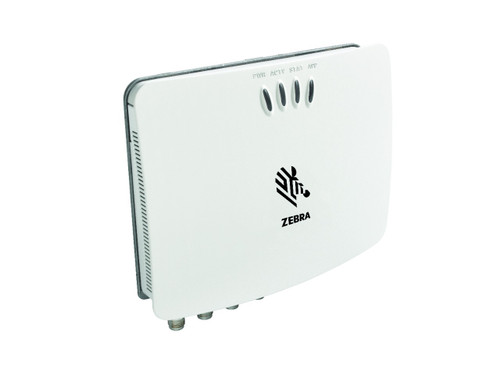
While the terms are often used interchangeably, an RF scanner typically refers to a handheld mobile device designed for portable data collection in the field, whereas an RFID reader is a broader term that includes both mobile and fixed-position readers. RF scanners are specifically optimized for human operators with features like ergonomic grips, display screens, and battery power, while RFID readers can include stationary portal systems, desktop readers, and integrated readers built into conveyor systems. Both devices use radio frequency technology to communicate with RFID tags, but RF scanners emphasize mobility and user interface, making them ideal for applications like inventory audits, asset verification, and warehouse picking operations.
How does a radio frequency scanner work for asset tracking?
A radio frequency scanner works by emitting electromagnetic waves that power and communicate with RFID tags attached to assets. When the RF scanner's antenna broadcasts a signal, passive RFID tags within range harvest energy from this signal and respond by transmitting their unique identification data back to the scanner. The scanner's receiver captures this data, decodes it, and typically displays or transmits the information to a connected asset tracking system. For asset tracking specifically, this enables real-time visibility into asset location, movement history, maintenance schedules, and utilization rates. The entire read process happens in milliseconds, allowing operators to quickly verify the presence of multiple assets simultaneously without direct line-of-sight, dramatically improving audit accuracy and reducing the time required for physical inventory counts from hours to minutes.
Which RF scanner is compatible with warehouse management systems?
Most modern enterprise-grade RF scanners from manufacturers like Zebra Technologies, Honeywell, and Impinj are designed with broad WMS compatibility through standard communication protocols and middleware integration. Compatible RF scanners typically feature Wi-Fi (802.11a/b/g/n/ac) and Bluetooth connectivity, support for common data formats (XML, JSON, CSV), and SDK availability for custom integration development. Leading WMS platforms including Manhattan Associates, SAP Extended Warehouse Management, Oracle WMS, and Blue Yonder (formerly JDA) have pre-built integration support for popular RF scanner models. When selecting an RF scanner for WMS compatibility, verify that it supports your warehouse's wireless infrastructure, runs on an operating system compatible with your WMS mobile application (typically Android or Windows), and can handle your required data transaction volumes. AtlasRFIDstore.com provides detailed compatibility information and integration support to ensure seamless connectivity between RF scanners and your existing warehouse management infrastructure.
Find the Perfect RF Scanner Solution for Your Operation
Ready to transform your asset tracking and inventory management with professional-grade RF scanner technology? AtlasRFIDstore.com offers an extensive selection of wireless RF scanners from industry-leading manufacturers, backed by expert technical guidance to ensure you select the optimal solution for your specific operational requirements. Our team of RFID specialists brings decades of combined experience in warehouse management, asset tracking, and supply chain optimization. Whether you need ruggedized handheld scanners for demanding warehouse environments, long-range readers for large facility coverage, or WMS-integrated mobile computers for complete inventory control, we provide the hardware, software, and support services to deploy a successful solution. Contact our solutions team today for a free consultation and discover how the right RF scanner technology can reduce inventory errors, accelerate workflows, and provide real-time visibility across your entire operation. Get started with AtlasRFIDstore.com and experience the difference that expert-backed RFID solutions make.
Contact Us