
-
 Key Features
- Ports: Eight RF antenna ports
- Connectivity: PoE and PoE+, optional Wi-Fi/Bluetooth dongle
- Durability: IP53 sealed housing
-
 Key Features
- Ports: 4-Port UHF RFID Reader
- Connectivity: Ethernet, USB, PoE, Wi-Fi, Bluetooth
- Performance: Industry-best for high-volume, rugged environments
-
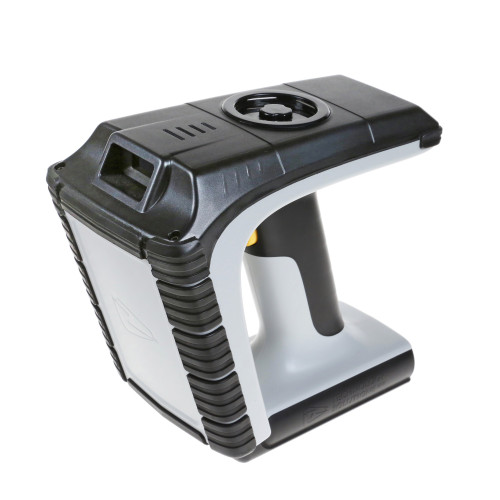 Key Features
- Connectivity: Bluetooth, USB
- Durability: IP67 water/dust resistant, 2 m drop spec
- Compatibility: Android, iOS, Windows devices
-
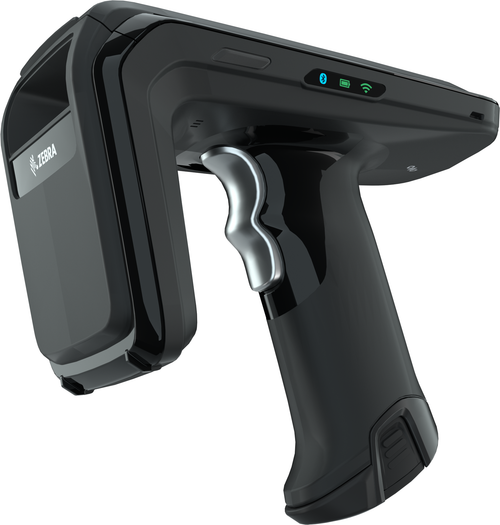 Zebra RFD40 Premium Plus UHF RFID Sled
SKU: RFD4031-G10B700-US
Key Features- Performance: 1,300+ tags per second read rate
- Connectivity: eConnex, Bluetooth 5.3, Wi-Fi 6, USB-C
- Features: Tri-function programmable trigger, integrated 1D/2D imager
-
 Key Features
- Performance: Up to 1,300 tags per second read rate
- Connectivity: Integrated RFID, NFC, barcode, 16 MP camera
- Durability: IP65 rating, survives repeated 5 ft (1.5 m) drops
-
 Zebra RFD9090 Long Range Ultra-Rugged UHF RFID Sled
SKU: RFD9091-G60G700-US
Key Features- Read Rate: 1,300+ tags per second
- Ruggedness: IP65/IP67 rated, 1.8 m (6 ft) drop spec
- Connectivity: Wi-Fi 6, Bluetooth 5.3, NFC tap-to-pair
-
 Zebra RFD9030 Standard Range Ultra-Rugged UHF RFID Sled
SKU: RFD9031-G60G700-US
Key Features- Read Rate: 1,300 tags/sec
- Ruggedness: IP65/IP67 rated, 1.8 m (6 ft) drop spec
- Connectivity: Wi-Fi 6, Bluetooth 5.3, NFC
-
 Key Features
- Connectivity: Bluetooth 4.2
- Read Rate: Up to 1200 tags/sec
- Operates with Android, iOS, Linux, Mac, and Windows
-
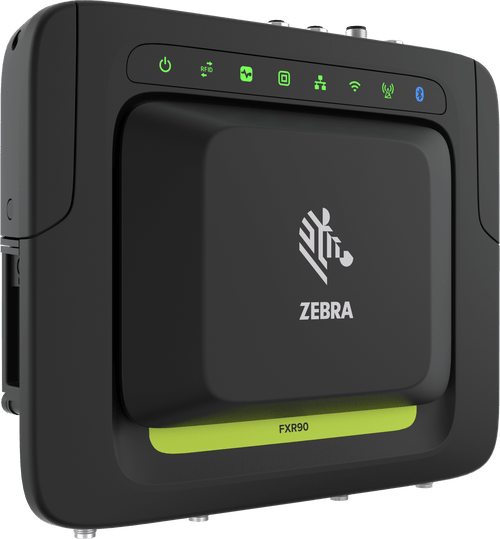 Key Features
- Ports: 4 External Antenna Ports
- Connectivity: Wi-Fi 6, Bluetooth 5.3, 5G options
- Performance: 1,300+ tags per second read rate
-
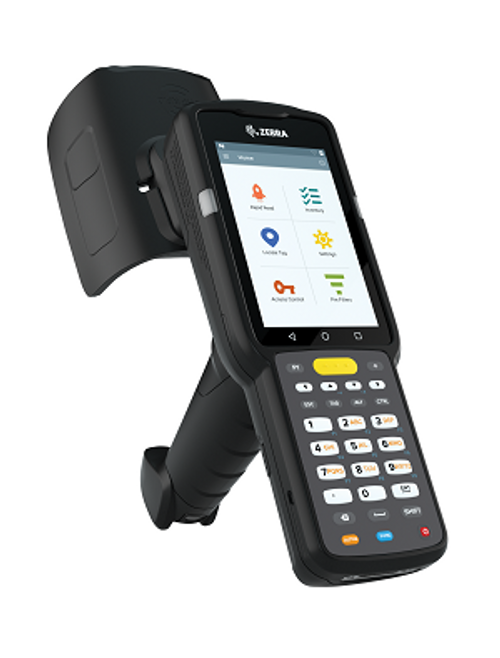 Key Features
- Read Range: 18.2 m (60 ft)
- Performance: Ultra-powerful processor, NFC reader
- Battery: 7000 mAh for full shifts
-
 Key Features
- Ports: 8-Port UHF RFID Reader
- Connectivity: Wi-Fi 6, Bluetooth 5.3, 5G, PoE, PoE+
- Performance: 1,300+ tags/sec, IP65/67 rated
-
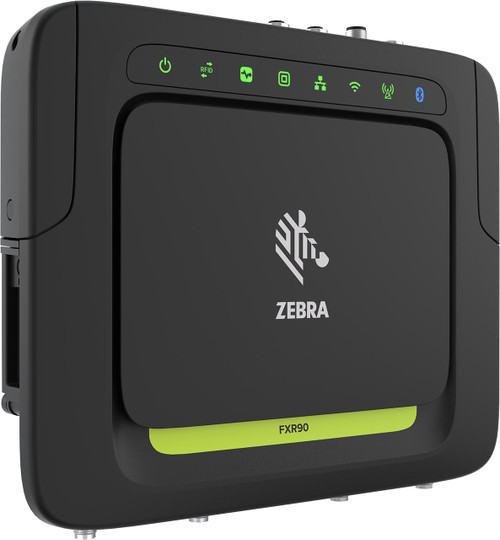 Key Features
- Ports: 4 External Antenna Ports
- Connectivity: WiFi 6, Bluetooth 5.3, 5G, PoE, PoE+
- Performance: Read rate of over 1,300 tags per second
-
 Key Features
- Performance: 1,300+ tags/sec, up to 24 m (80 ft) read range
- Connectivity: Wi-Fi 6, Bluetooth 5.3, NFC, eConnex
- Integrated Scanning: SE4100 imager for 1D/2D barcodes
-
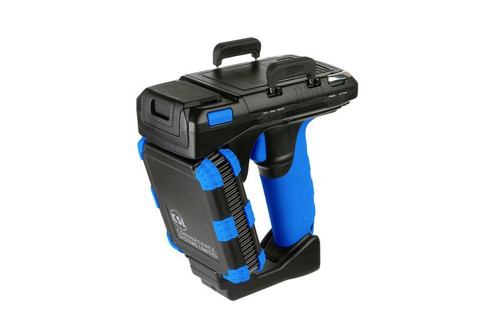 Key Features
- Powered by the Impinj E710 reader chip
- Works with all Android Phones or iPhones
- Optional Integrated 2D Barcode Scanner
-
 FEIG MRU400i Mid-Range Integrated UHF RFID Reader
SKU: 7023.000.10
Key Features- Connectivity: Integrated antenna + external RP-TNC port
- Performance: Up to 4 m (13.1 ft) with internal, 10 m (33 ft) with external
- Operating System: Linux OS for edge computing
-
 Key Features
- Powered by the Impinj Indy R2000 reader chip
- Works with all Android Phones or iPhones
- Optional Integrated 2D Barcode Scanner
-
![Zebra FXR90 Ultra-Rugged Fixed RAIN RFID Reader | 4-Port [Clearance] | FXR90010-400000-US-C](https://cdn11.bigcommerce.com/s-ka7ofex/images/stencil/500x659/products/7678/28254/cq5dam.web.1280.1280_25__06176.1763748094.1280.1280__42946.1770995387.jpg?c=2 "Zebra FXR90 Ultra-Rugged Fixed RAIN RFID Reader | 4-Port [Clearance] | FXR90010-400000-US-C") [Clearance - ALL SALES FINAL] Zebra FXR90 Ultra-Rugged Fixed RAIN RFID Reader | 4-Port
[Clearance - ALL SALES FINAL] Zebra FXR90 Ultra-Rugged Fixed RAIN RFID Reader | 4-PortSKU: FXR90010-400000-US-C
Key Features- Ports: 4 External Antenna Ports
- Connectivity: Wi-Fi 6, Bluetooth 5.3, 5G, PoE
- Performance: Over 1,300 tags per second read rate
-
![Zebra MC3390xR Integrated Long-Range RFID Handheld Reader Kit [Clearance] | MC339U-GE4EG4US-KIT-C](https://cdn11.bigcommerce.com/s-ka7ofex/images/stencil/500x659/products/6981/26609/Zebra_MC3390xR_Handheld_Reader__27681.1763669586.png?c=2 "Zebra MC3390xR Integrated Long-Range RFID Handheld Reader Kit [Clearance] | MC339U-GE4EG4US-KIT-C") [Clearance - ALL SALES FINAL] Zebra MC3390xR Integrated Long-Range RFID Handheld Reader Kit
[Clearance - ALL SALES FINAL] Zebra MC3390xR Integrated Long-Range RFID Handheld Reader KitSKU: MC339U-GE4EG4US-KIT-C
Key Features- Performance: Captures RFID tags >18.2 m (60 ft) away
- Data Capture: Integrated long-range RFID and 1D/2D barcode reader
- Connectivity: Integrated NFC reader, Android OS
-
 FEIG MRU400iX Mid-Range Integrated UHF RFID Reader
SKU: 7025.000.10
Key Features- Read Range: Up to 4 m (13.1 ft) internal, 10 m (33 ft) external
- Connectivity: Edge computing with Linux OS, 4x M12 connectors
- Durability: Industrial operating conditions (railway and manufacturing)
-
 FEIG LRU4000X Long-Range Fixed UHF RFID Reader
SKU: 7021.000.10
Key Features- Read Range: Up to 10 m (32.8 ft)
- Ports: 4 antenna ports
- OS: Linux OS for custom applications
-
 FEIG LRU4000 Long-Range Fixed UHF RFID Reader
SKU: 7019.000.10
Key Features- Ports: 4 antenna ports
- Performance: Read range up to 10 m (32.8 ft)
- OS: Edge computing device with Linux OS
-
![TSL 2166 Bluetooth Rugged UHF RFID Reader | With Imager [Clearance] | 2166-AS1-C](https://cdn11.bigcommerce.com/s-ka7ofex/images/stencil/500x659/products/4617/19074/TSL_2166_Reader__53052.1717598186.PNG?c=2 "TSL 2166 Bluetooth Rugged UHF RFID Reader | With Imager [Clearance] | 2166-AS1-C") [Clearance - ALL SALES FINAL] TSL 2166 Bluetooth Rugged UHF RFID Reader | With Imager
[Clearance - ALL SALES FINAL] TSL 2166 Bluetooth Rugged UHF RFID Reader | With ImagerSKU: 2166-AS1-C
Key Features- Connectivity: Bluetooth v4.2
- Durability: Highly resistant to water, dust, and mechanical trauma (IP67)
- Features: High performance UHF RFID reading/writing with 2D data scanning
More about Rugged RFID Readers
Rugged RFID readers are engineered for dependable tag reading in challenging environments where durability, mobility, and consistent performance matter. Built to withstand drops, impacts, dust, moisture, and demanding daily use, these durable readers support reliable RFID data capture across warehouse, manufacturing, logistics, retail, inventory management, and field applications. Choose rugged RFID readers designed to keep RFID operations running in demanding conditions.