
-
 Key Features
- Compact Size: 150 mm / 5.9 in square footprint
- IP Rating: IP68 rated for outdoor and industrial use
- Read Range: 1.5 ft wider than similar antennas
-
 Key Features
- Just 14 mm / 0.55 in thick
- Up to 9 m (29 ft) read range
- IP 67 rated for outdoor use and industrial applications
-
 Vulcan RFID p12 UHF RFID Antenna (FCC/ETSI)
SKU: VUL-ADAN-p12
Key Features- Beamwidth: 90° broadside, 60° endfire
- Form Factor: Very thin for integration inside objects
- IP68 Rated: Dust resistant; water immersion up to 1 m (3 ft) for 30 min
-
 MTI MT-242043/TRH/A/K (RHCP) Outdoor RFID Antenna (Global)
SKU: MT-242043-TRH-A-K
Key Features- Gain: 7.5-9.5 dBic RHCP (Right-Hand Circularly Polarized)
- Size: 30.48 x 30.48 cm (12 x 12 in) weather-resistant IP67
- Frequency: 865-868 MHz (ETSI) & 902-928 MHz (FCC) Global
-
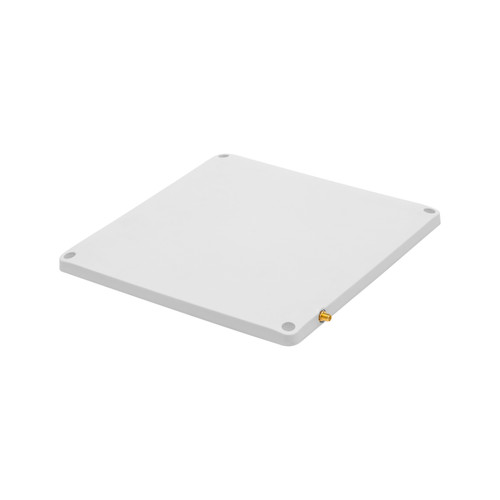 Key Features
- Size: 250mm / 10 inch square footprint, 14mm / 0.55 inch thick
- Durability: IP67 rated for outdoor and industrial applications
- Read Range: Up to 9 m (29 ft)
-
 Vulcan RFID p16 UHF RFID Antenna (FCC/ETSI)
SKU: VUL-ADAN-p16
Key Features- Beamwidth: 20° endfire, 90° broadside
- Environmental: IP68 rated, dust and water immersion up to 1 m (3 ft)
- Applications: Sport timing, loss-prevention, portals, vehicle tracking
-
 Vulcan RFID C610 Outdoor RFID Antenna | FCC
SKU: VUL-C610-FCC
Key Features- Polarization: Circular optimized for all tag orientations
- Size: Thin form factor, 100 x 100 mm VESA mounting
- Rating: IP67 rated, waterproof SMA connector
-
 Key Features
- Read Range: Up to 9m (29 ft)
- Thickness: 12mm (0.5 in)
- Robustness: IP65 rated for indoor/outdoor use
-
 Zebra AN720 (LHCP) RFID Antenna (902-928 MHz)
SKU: AN720-L51NF00WUS
Key Features- Frequency: 902-928 MHz
- IP Rating: 67 (indoor/outdoor use)
- Beam-width: 100 degree for wider coverage
-
 Key Features
- Size: 19.3 cm x 19.3 cm x 2.4 cm (7.6" x 7.6" x .95")
- Gain: 6 dBi Circular Polarization
- Frequency: 902-928 MHz (FCC) and 865-870 MHz (ETSI)
-
 Key Features
- Size: 250 mm x 250 mm (10 in x 10 in)
- Environmental: IP 67 sealed included connector
- Mounting: Flush and VESA-studded mounting options
-
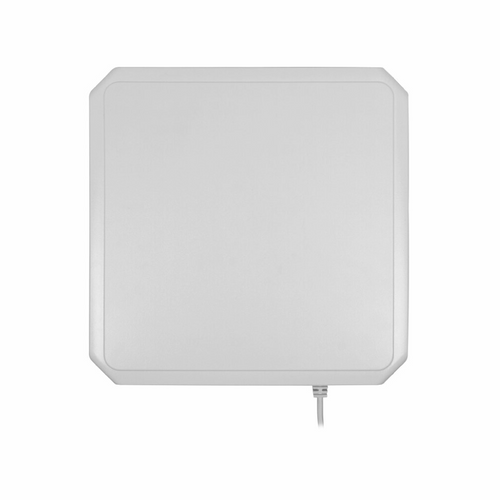 Vulcan RFID S9028PCR (RHCP) Indoor RFID Antenna (FCC)
SKU: VUL-S9028PCR96RTN
Key Features- VSWR: Extremely low VSWR
- Polarization: Right hand circularly polarized (RHCP)
- Durability: IP 54 rated, weather and UV resistant radome
-
 Key Features
- Size: 150 mm (5.9-inch) square compact footprint
- Read Range: Up to 1.5m (4.9 ft) mid-range
- Form Factor: Rugged, compact, and timeless design
-
 Key Features
- Durability: IP68 and IP69K rated for extreme environments
- Operating Temperature: Down to -90°C (-130°F)
- Polarization: Linear polarized antenna with >6 m read range
-
 Zebra AN520 RFID Antenna | FCC
SKU: AN520-FCL60010US
Key Features- Ruggedness: IP 68 Rated
- Size: 150 mm (5.9 in) square footprint
- Mounting: Versatile flush mounting option
-
 Vulcan RFID C912 Outdoor RFID Antenna | FCC
SKU: VUL-C912-FCC
Key Features- Polarization: Circular optimized for all tag orientations
- Build: Durable ASA with 100 x 100 mm VESA mounting
- Rating: IP67 rated for use outdoors
-
 Key Features
- Gain: 5 dBic Circular Polarization
- Size: 210 x 155 mm (8 x 6 in)
- Ruggedness: IP67 Rated, impact strengthened
More about Rugged RFID Antennas
Rugged RFID antennas are designed to deliver reliable RFID performance in demanding environments where durability and consistent read coverage are essential. Built to withstand exposure to dust, moisture, impacts, temperature changes, and everyday wear, these durable antennas support dependable RFID deployments across warehouse, manufacturing, logistics, retail, inventory management, and outdoor applications. Choose rugged RFID antennas designed for reliable operation in challenging conditions.