
Meet Keonn: The Behind-the-Scenes RFID Company Powering Your Favorite Retail Stores
When people think about RFID in retail, they usually think about faster checkout, better inventory accuracy, fewer out-of-stocks, or sleek self-checkout experiences where an entire basket of items can be read at once.
What they may not think about is the RFID hardware working quietly behind the scenes to make those experiences possible.
That is where Keonn comes in.
Keonn is a Barcelona-based RFID technology company that has been working with RFID since 2011. The company develops RFID systems, components, and software designed to help retailers improve store operations, create better customer experiences, and bring more intelligence into physical spaces.
While Keonn may not be a household name to every shopper or technology professional, its RFID hardware has appeared in retail environments connected to brands including H&M, Fabletics, River Island, Marks & Spencer, Under Armour, Harley-Davidson, and Lucky Brand.
Who Is Keonn?
Keonn Technologies is headquartered in Barcelona, Catalonia, Spain, and supplies RFID solutions to system integrators around the globe.
The company focuses heavily on retail, but its RFID technology can also be used in warehouses, libraries, hospitals, and other environments where items need to be identified, tracked, counted, or managed more efficiently.
Although Keonn may not have the same name recognition as some larger RFID hardware manufacturers, it is quietly becoming a staple in modern retail environments.
You may not see Keonn running splashy advertising campaigns or putting its name front and center inside stores. Instead, its technology appears in the places where retail teams need RFID to work: on the sales floor, in the stockroom, at checkout, in fitting rooms, and at store entrances.
That lower-profile approach is part of what makes Keonn so interesting. The company has built its reputation around solving major retail challenges with RFID, including improving inventory visibility, reducing checkout friction, supporting loss prevention, and creating more connected customer experiences.

How Keonn Differentiates Itself in the RFID Market
Many RFID hardware companies are best known for one specific part of an RFID system, such as handheld readers, fixed readers, antennas, printers, tags, or middleware.
Keonn is different because its portfolio is structured more like a complete retail RFID ecosystem.
Keonn’s RFID System Categories
- Tag encoding
- Automatic inventory and tracking
- Interactive retail systems
- RFID point-of-sale systems
- RFID loss-prevention systems

AdvanMirror Smart Recommenders—Interactive Retail System
Instead of focusing only on individual devices, Keonn develops systems for the primary ways retailers use RFID inside stores. These use cases include inventory visibility, item location, self-checkout, point-of-sale reading, smart fitting rooms, tag encoding, and loss prevention.
The company also offers RFID components such as readers, antennas, and multiplexers. Its software platforms include AdvanCloud and AdvanNet.
In other words, Keonn is not making only one piece of RFID hardware. The company builds infrastructure that can support connected retail experiences from the stockroom to the sales floor and through checkout.
What Makes Keonn Stand Out?
Keonn’s biggest differentiator is that it is not simply selling RFID hardware. It is building connected systems around real retail workflows.
That shows up in a few important ways:
- Retail-First Product Design: Keonn’s solutions are built around the store environment rather than RFID reading in isolation. The company positions its technology around improving shopping experiences and optimizing store processes.
- A Broader RFID System Portfolio: Keonn supports multiple stages of the RFID journey, including tag encoding, inventory tracking, self-checkout, interactive retail, point-of-sale reading, and loss prevention.
- Fixed RFID Infrastructure Expertise: Keonn has a strong presence in overhead and in-store RFID infrastructure. These systems can help retailers move beyond periodic handheld scans and toward more automated inventory visibility.
- Software Designed for Keonn Systems: AdvanNet acts as a common software platform for Keonn RFID readers and systems. It gives integrators a centralized layer for managing Keonn products and connecting them to third-party systems.
- Deployments With Recognizable Retailers: Keonn’s published case studies include retail brands and stores associated with H&M, Fabletics, River Island, Marks & Spencer, Under Armour, Harley-Davidson, Lucky Brand, and others.
A Retailer's Perspective
River Island is one of the recognizable retail names connected to Keonn’s RFID point-of-sale and self-checkout case studies.
In an interview with Raconteur, Jon Wright, River Island’s head of loss prevention and safety, summarized the retailer’s broader RFID motivation:
“The main goal was to fix some of the stock accuracy issues in our business.”
That statement gets to the heart of why Keonn’s approach matters.
Retailers are not usually looking for RFID hardware simply to have RFID hardware. They are trying to solve operational problems inside the store. They want better visibility, cleaner inventory data, faster checkout, smoother customer experiences, and fewer blind spots between the stockroom and sales floor.
Keonn’s differentiation is that its systems are designed around those outcomes.
Built for the Next Stage of Retail RFID
Many retailers begin their RFID journey with handheld inventory counts. That is often the first practical step because it gives store teams faster and more accurate visibility into available inventory.
As RFID programs mature, however, retailers often want to automate more of the process.
That is where Keonn’s product family becomes especially interesting. Its systems support more advanced retail concepts, including:
- Overhead RFID inventory tracking
- RFID-enabled self-checkout
- Smart fitting rooms and interactive experiences
- RFID point-of-sale reading
- In-floor and entrance-based loss prevention
- Centralized software connectivity for Keonn products
In River Island stores, for example, Keonn reports that its AdvanGo self-checkout system and AdvanPay RFID point-of-sale reader were used to reduce queues, improve the shopping experience, and provide greater visibility into products throughout the store.
 AdvanGo Bagwell Fixture— RFID-Enabled Self-Checkout
The Takeaway
Keonn does not differentiate itself by being another RFID reader manufacturer.
It differentiates itself by building RFID around a more complete retail store experience.
Its technology is designed for the environments where RFID can create the most value in modern retail: inventory visibility, checkout, fitting rooms, loss prevention, and connected store operations.
For retailers and integrators looking to move from basic RFID adoption toward more automated and customer-facing RFID experiences, Keonn is a company worth knowing.
Keonn in Action: Retail Brands Using Keonn RFID
One of the easiest ways to understand Keonn’s role in retail is to look at where its technology has already been deployed.
H&M Middle East and North America
According to Keonn, H&M operations in the Middle East and North America adopted Keonn RFID technology across Alshaya stores to support real-time inventory, faster payment, self-checkout, loss prevention, and inventory management through AdvanCloud.
The deployment included Keonn systems such as AdvanTrack-600, AdvanPay, AdvanGo, AdvanMat, and AdvanCloud.
Keonn lists the results as improved real-time stock visibility, faster operational processes, an enhanced customer experience, and greater security through free-flow entrances.
 Jonathan Wilson - stock.adobe.com
Fabletics
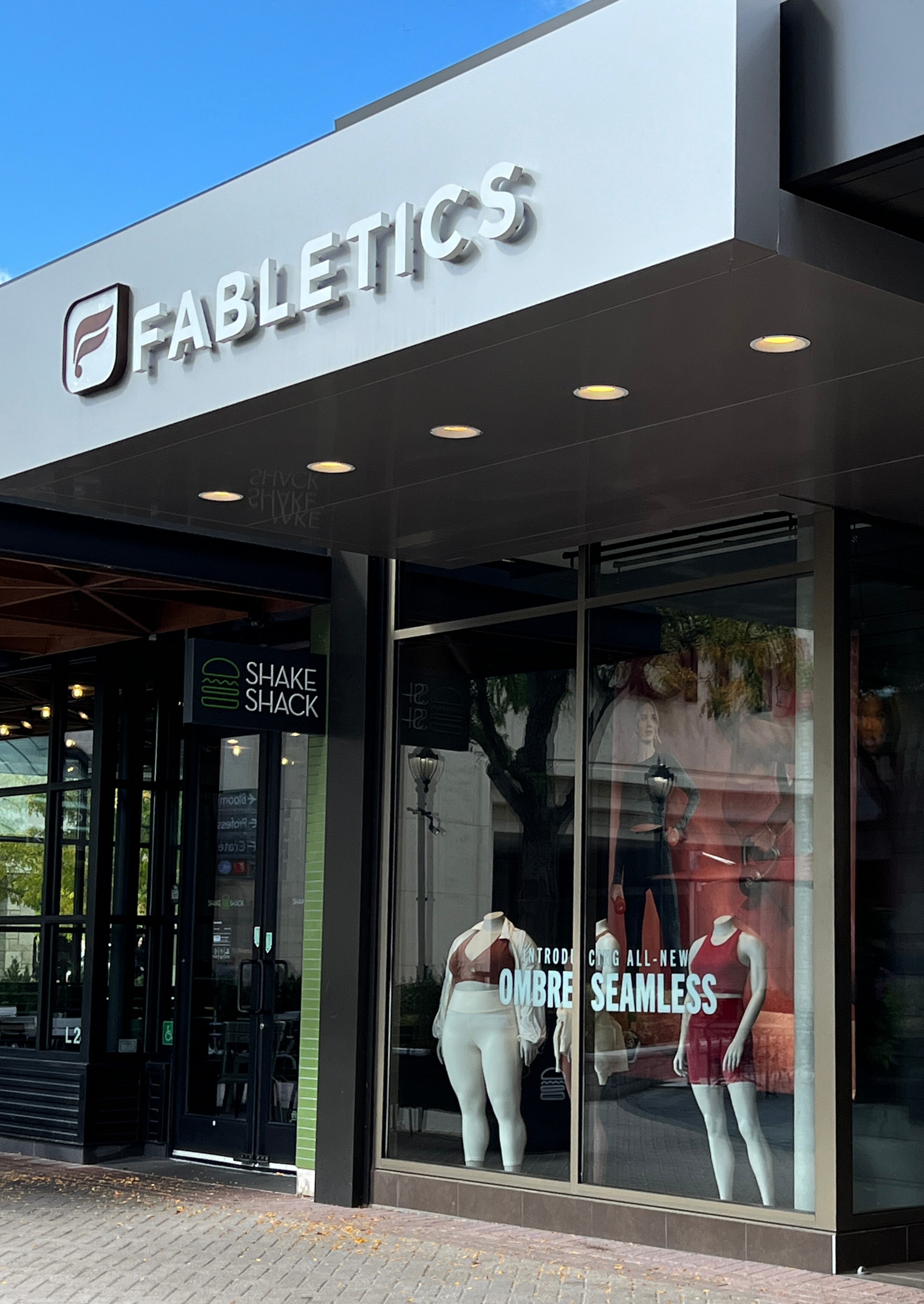
Fabletics has used Keonn technology to improve real-time inventory visibility in its stores.
Keonn reports that Fabletics installed AdvanTrack-600 across physical locations and combined it with GreyOrange’s gStore application to improve daily inventory accuracy, sales, and replenishment efficiency.
The Fabletics case study also states that AdvanTrack-600 is deployed across more than 13 countries and hundreds of stores, with additional installations continuing to roll out.
 MKPhoto - stock.adobe.com
River Island
River Island, the British high-street retailer, installed Keonn RFID self-checkout systems and RFID point-of-sale readers to help accelerate the payment process.
Keonn reports that the retailer used AdvanGo for self-checkout and AdvanPay for RFID point-of-sale reading.
After a pilot in two stores, the RFID checkout solution was rolled out to six stores, with additional stores planned for 2024. Keonn states that the solution helped reduce queues, improve the customer shopping experience, and give the retailer greater visibility into products inside the store.
 Taljat - stock.adobe.com
Marks & Spencer
Marks & Spencer deployed Robin, Keonn’s autonomous RFID robot, in two London stores.
According to Keonn, Marks & Spencer combined Robin on the sales floor with AdvanTrack-600 in the back store to support automatic daily inventory.
Keonn states that the system delivers daily inventory information with greater accuracy and item-location data, helping Marks & Spencer improve customer service, operational efficiency, and sales.
 Electric Egg Ltd. - stock.adobe.com
Under Armour
Under Armour stores in Serbia, managed by Kvantum Sport, implemented Keonn RFID systems for inventory, checkout, and loss prevention.
The deployment included AdvanScan for stock counts and store processes, AdvanPay for faster payments, and AdvanMat for in-floor loss prevention across five stores.
Keonn states that the stores now benefit from unobstructed entrances, an improved customer experience, higher stock availability, and shorter checkout queues.
 Andrii - stock.adobe.com
The Bigger Picture: RFID Customers May Never Notice
The best retail technology often works in the background.
A shopper may not know that RFID is helping a store associate locate the right size in the stockroom. They may not realize that RFID is supporting real-time inventory accuracy, accelerating checkout, or helping a retailer reduce shrink.
They may never see the antennas, readers, floor mats, overhead systems, or software layers that keep everything connected.
But those systems can make a major difference in how the store operates.
Why You Should Know Keonn’s Name
- Packaged, retail-ready RFID systems: Keonn offers solutions designed around practical retail workflows rather than isolated RFID components.
- Shopify POS integration: Integration options can help retailers connect RFID functionality with existing commerce and point-of-sale environments.
- Reader options with or without enclosures: Keonn supports both standalone deployments and embedded RFID applications.
- Integration-ready hardware and software: Its ecosystem includes readers, antennas, multiplexers, accessories, and software platforms.
- Flexible reader and multiplexer configurations: Options include one-, two-, and four-port configurations, as well as integrated and standalone designs.
- Recognizable global deployments: Keonn hardware is used in retail environments connected to some of the world’s best-known brands.
- Multiple communication options: Keonn systems can support technologies such as USB HID, HTTP, MQTT, SQL, and TCP.
Final Thoughts
Keonn may not be the first RFID brand every retail customer recognizes, but its technology is already connected to some highly recognizable store experiences.
From real-time inventory at Fabletics and RFID self-checkout at River Island to autonomous inventory robots at Marks & Spencer and RFID systems supporting H&M and Under Armour store operations, Keonn has established a strong presence in retail RFID.
For retailers looking to modernize store operations, improve inventory visibility, reduce checkout friction, or explore the next stage of RFID-enabled retail, Keonn is a company worth getting to know. If you are ready to evaluate or implement Keonn products in your environment, Contact An Atlas RFID Specialist to get expert guidance on hardware selection, system configuration, and deployment.