
Managing Reusable Containers (RPCs & RTIs) & A 10 Step RFID RTI Implementation Guide
Packaging has traditionally been treated as a consumable expense. As reusable packaging becomes more common, manufacturers are reevaluating this approach. Totes, racks, and pallets now circulate across extended supply networks. These assets carry value, support sustainability goals, and require active management. RFID provides the visibility needed to manage reusable packaging at scale.

- The Shift Toward Reusable Packaging
- From Packaging Spend to Asset Lifecycle Management
- Why Visibility Becomes Critical
- Sustainability Benefits and Tradeoffs
- Turning Data Into Strategy
- Choosing the Right RFID Equipment for RTI Tracking
- A 10 Step Implementation Strategy for RTI Tracking
- Supporting the Transition with Expertise
- A New Way to Think About Packaging
The Shift Toward Reusable Packaging
Manufacturers are adopting reusable packaging (RPCs, IBCs, RTIs, RTCs) to reduce waste, lower material costs, and meet sustainability objectives. Studies estimate that millions of returnable containers are lost each year across global supply chains. Even small loss rates translate into significant replacement costs.
As reuse increases, so does complexity. Containers travel farther, interact with more partners, and remain in circulation longer - making control and accountability more difficult without the right systems in place.
From Packaging Spend to Asset Lifecycle Management
Leading organizations now treat RTIs as managed assets rather than disposable materials. This shift includes:
- Tracking asset utilization
- Monitoring dwell time
- Planning maintenance and replacement cycles
RTIs begin to resemble fleet equipment rather than packaging supplies - requiring the same level of oversight, performance tracking, and lifecycle planning.

Why Visibility Becomes Critical
Manual tracking does not scale with increased reuse. As networks expand, assumptions replace certainty. RFID provides continuous insight into where assets are, how often they are used, and where losses occur. This visibility supports better planning and more informed decision making.
Zebra RFID readers and tags support large-scale asset tracking by capturing movement automatically across facilities and partners.
Sustainability Benefits and Tradeoffs
Reusable packaging reduces waste, minimizes reliance on single-use materials, and supports long-term environmental goals. Over time, fewer raw materials are consumed, and less waste is sent to landfills.
However, these benefits are only realized when assets remain in circulation. Lost, idle, or underutilized containers reduce the environmental and financial return on reusable programs. This creates a tradeoff:
- Greater sustainability potential
- Higher operational complexity

Without visibility, organizations risk overproducing containers, increasing transportation inefficiencies, or replacing assets prematurely—offsetting sustainability gains. RFID helps close this gap by ensuring assets stay in use, losses are minimized, and reuse systems operate as intended. It enables organizations to scale sustainability efforts without sacrificing control or efficiency.
Turning Data Into Strategy
RFID data supports:
- Improved asset utilization
- Reduced replacement spend
- More accurate sustainability reporting
Over time, organizations gain insight into how packaging contributes to overall supply chain performance—turning what was once a cost center into a measurable, optimizable asset class.
Choosing the Right RFID Equipment for RTI Tracking
A successful RTI tracking system depends on matching the right RFID equipment to the asset, environment, and workflow. For many reusable packaging applications, the core system includes RFID tags or labels, fixed RFID readers, antennas, and software to process and act on the data.
For dock doors, facility entrances, shipping lanes, and other high-volume transition points, a fixed reader like the Zebra FXR90 can help capture RTI movement automatically as tagged containers enter, exit, or move through defined read zones. When paired with properly positioned Zebra RFID antennas, organizations can create consistent read areas that capture movement without requiring employees to manually scan each asset.
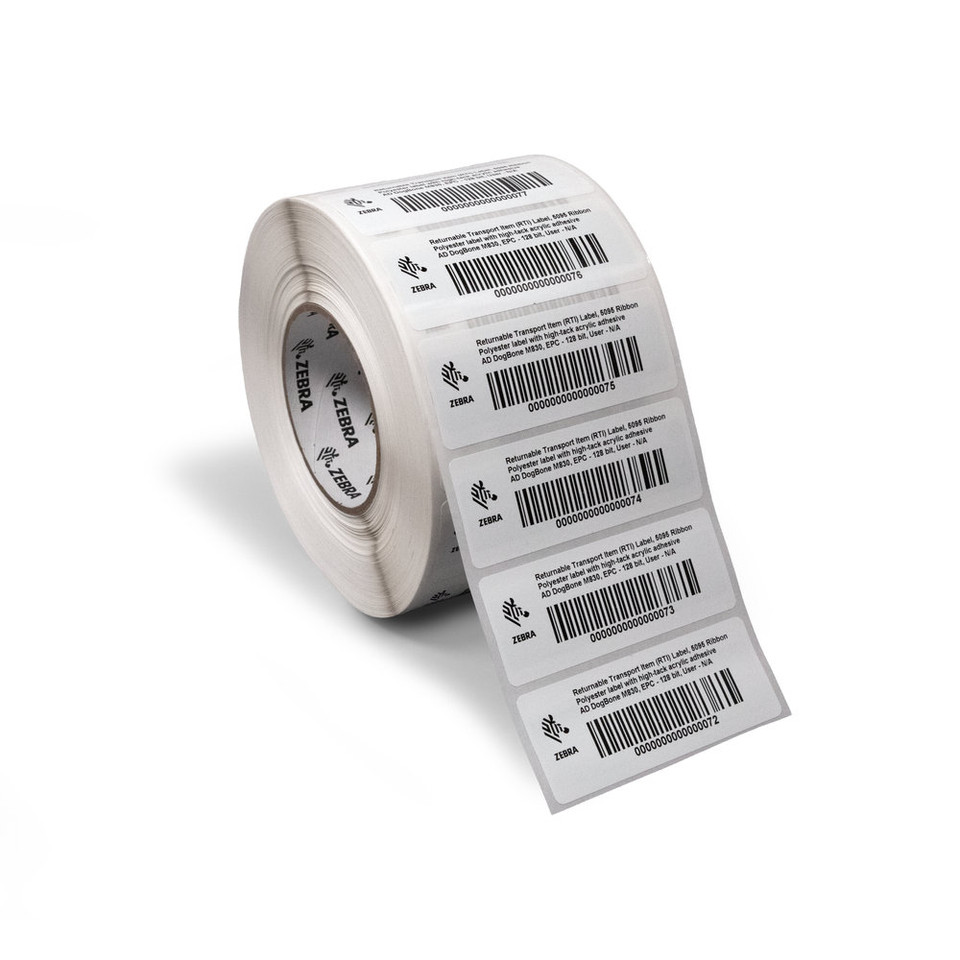
The tag is just as important as the reader. RTIs are commonly made from plastic, but they may also be exposed to outdoor conditions, chemicals, repeated handling, stacked storage, or impact from forklifts and heavy equipment. The Zebra Returnable Transport Item M830 RFID Label is designed for reusable plastic containers and features the AD Dogbone M830 inlay, with a read range up to 21 m, or 68.9 ft, and durable construction for demanding warehouse and supply chain environments. It is also built to withstand exposure to UV light, seawater, harsh chemicals, and repeated use over time.
Together, RFID readers, antennas, and RTI-specific tags create the foundation for automatic asset visibility. The goal is not simply to tag every container, but to design a system that captures the right data at the right points in the RTI lifecycle.
A 10 Step Implementation Strategy for RTI Tracking
Deploying RFID for RTI tracking works best when organizations start with a focused use case, validate the process, and scale from there. Instead of trying to track every container across every location on day one, begin by identifying the highest-value visibility gaps.
A practical implementation strategy includes:
- Determine whether RTIs stay internal or move externally. If RTIs remain inside one facility, your read zones may focus on production areas, storage locations, wash stations, or dock doors. If RTIs leave your building, talk with logistics partners, suppliers, distributors, or customers about how RFID data can be captured across the broader supply chain.
- Map how RTIs move. Identify where containers enter the building, where they exit, where they dwell, and where they are most likely to be lost or delayed. These movement points help determine the best read zones, such as dock doors, receiving areas, production line transitions, staging areas, or return points.
- Select the right RFID tag for the asset. Consider the RTI material, surface type, environment, and handling conditions. Many RTIs are plastic, but some may be exposed to moisture, sunlight, chemicals, outdoor storage, high temperatures, or rough handling. If containers are stacked, nested, tossed, washed, or frequently hit by forklifts or equipment, tag durability and placement become especially important.
- Design the read zones carefully. Fixed readers and antennas need to be positioned based on the desired read area, traffic flow, tag orientation, and surrounding materials. A dock door portal may require a different antenna setup than a conveyor, doorway, storage area, or work cell.
- Plan how the data will be used. RFID data only becomes valuable when it supports a business process. Determine whether the data needs to flow into an ERP, WMS, asset management system, inventory platform, or custom dashboard. Teams should define what events matter, such as checked in, checked out, returned, idle, missing, or assigned to a specific customer or route.
- Evaluate software and integration needs. If your team does not have internal software engineering resources, a software provider like Avancir can help define how RFID data should be collected, processed, and integrated into existing systems. This step is especially important when RTI tracking needs to connect with business rules, reporting, alerts, partner data, or multi-site workflows.
- Start small and scale. Begin with one high-value read zone, such as a dock door, receiving area, or facility entrance. Tag a small group of RTIs, test read performance, validate the data, and refine the workflow before expanding to additional assets, locations, or partners.
- Test before standardizing. Run a pilot that includes real RTIs, real movement patterns, and real environmental conditions. Confirm that tags remain attached, reads are consistent, data is accurate, and employees can follow the process without added friction.
- Create a process for exceptions. Even strong RFID systems need a plan for missed reads, damaged tags, untagged containers, duplicate records, or assets that leave the expected workflow. Defining exception handling early makes the system more reliable as it scales.
- Roll out in stages and measure results over time. Create a phased implementation strategy and track improvements in RTI recovery, utilization, replacement spend, dwell time, and reporting accuracy. These metrics help prove ROI and identify where the next phase of the deployment should go.
By starting with the movement points that matter most, organizations can build an RTI tracking system that is practical, measurable, and scalable. The most successful deployments combine the right RFID equipment with a clear data strategy, defined workflows, and a phased rollout plan.
Supporting the Transition with Expertise
Implementing asset-based packaging strategies requires alignment across operations, IT, and partners. Atlas RFID helps manufacturers transition from tracking loss to managing asset life cycles. By aligning RFID data with business goals, organizations gain control without adding complexity.
A New Way to Think About Packaging
Reusable packaging shifts from a cost to manage to an asset to optimize. RFID provides the visibility needed to support this shift—helping manufacturers protect investments, improve sustainability outcomes, and operate with greater confidence across their supply chain.
Start building a smarter reusable packaging strategy. Connect with our team to explore how RFID can bring visibility, control, and long-term value to your operations.