
TSL 1128 vs. 2128 vs. 3138: Which Handheld RFID Reader Is Right for Your Workflow?
Technology Solutions (UK) Ltd, known as TSL, is a global leader in mobile RFID, offering a catalogue of UHF RFID readers built for real-world data collection across industries.
One of the defining strengths of the entire TSL reader lineup is that every reader is designed to be platform independent. TSL handheld UHF RFID readers work across all major operating systems, including iOS, Android, and Windows, and are hardware independent - meaning that they can pair with virtually any Bluetooth-enabled host device, from consumer smartphones and enterprise handhelds to tablets, laptops, and desktop PCs. That flexibility means your investment in TSL hardware isn't locked to a single device ecosystem or operating system, your reader works with the mobile platform your team already uses.
TSL also makes it straightforward for developers to build custom RFID apps for Android, iOS, or Windows through free software development kits, with code samples and demonstration applications included. Whether you're evaluating your first RFID deployment or expanding an existing one, the question isn't whether a TSL reader will work with your devices — it's which model fits your workflow best.
Choosing an RFID reader usually starts with range, but it rarely ends there.
The right handheld UHF RFID reader depends on how your team works:
- How often they scan
- How dense the tag population is
- What mobile devices they use
- Whether barcode scanning matters
- How long shifts run
- How much flexibility your team needs in the field
The TSL 3138, 2128P, and 1128 are all capable mobile RAIN RFID readers, but they fit different operational needs. The 3138 is the newest standard-duty option, built for faster tag acquisition, better processing, longer operating times, updated Bluetooth performance, and newer workflow features like Command Scan. The 2128P remains a strong fit for many standard-duty, and for longer-range applications - the 2128L. The 1128 can still make sense for teams with existing deployments, familiar accessories, or straightforward mobile RFID needs.
Below is a practical comparison to help you decide which model belongs in your RFID workflow.
Overview of Each Reader
TSL 3138 Bluetooth UHF RFID RAIN Reader
The TSL 3138 is the newest reader from TSL and is positioned as an updated, performance-boosted successor to the 2128P series. TSL notes that the 3138 uses newer internal hardware, including an Impinj E710 core, and is designed for faster data acquisition, better RFID performance, more processing capability, longer operating times, and stronger security features. It also supports up to 1,200 tags per second and offers a nominal read range of up to 9 meters, or 29.5 feet, in open-field conditions.
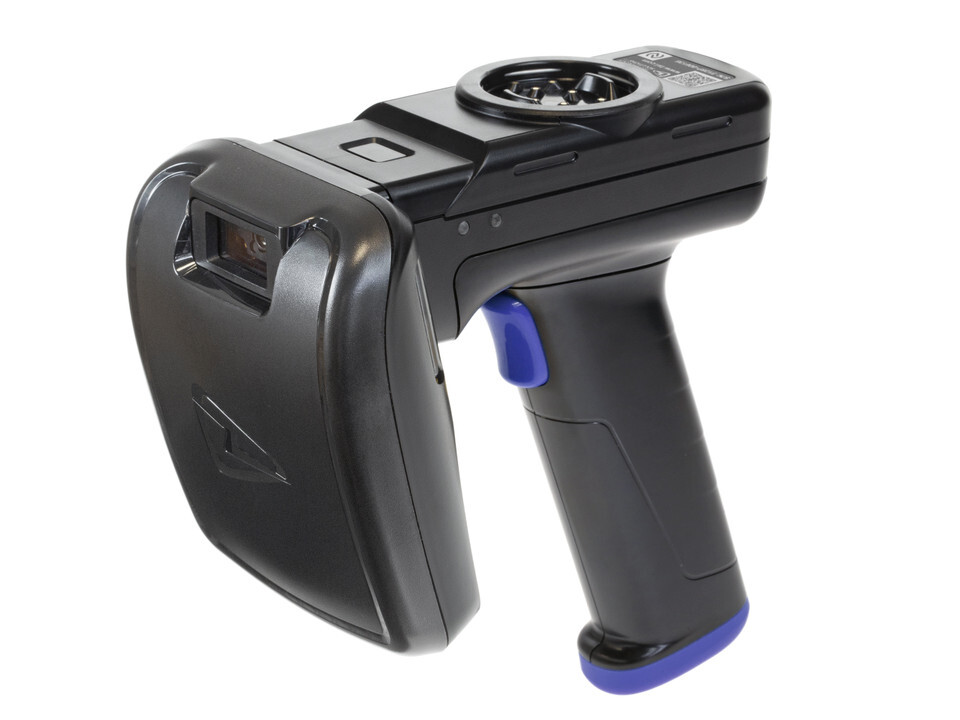
Where the 3138 stands out is not just in read distance. It is built for modern mobile workflows: USB-C charging, optional pogo-pin docking, Bluetooth Classic, BLE, HID, Apple iAP2 support, NFC pairing, ePop-Loq mounting, optional 2D barcode scanning, haptic/audio/LED feedback, and Command Scan configuration through special 2D barcodes.
Learn MoreTSL 2128L/2128P Bluetooth UHF RFID RAIN Reader
The TSL 2128 family are standard-duty handheld RFID readers, used widely in mobile inventory, asset tracking, and field data collection applications. In the comparison guide, the 2128L is shown with up to 15 meters, or 49 feet, of read range, while the 2128P is shown with up to 9 meters, or 29.5 feet. The 2128P and 2128L also support ePop-Loq mounting and Apple MFi certification, and both include hardware-based tag de-duplication.
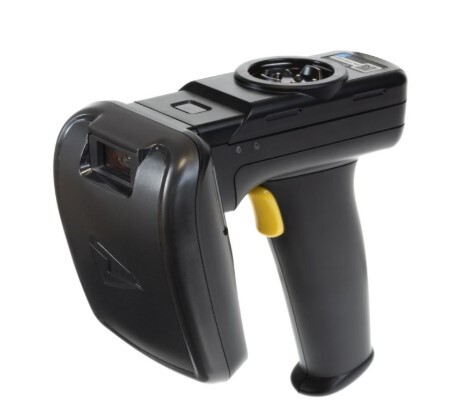
For customers who need a known, proven reader and already have 2128P accessories or application workflows in place, the 2128P may still be the practical choice. The newer, 3rd generation 3138’s speed, battery improvements, Bluetooth updates, and workflow features are valuable additions to justify moving to the newer platform. With the seamless backwards and forwards compatiability within the TSL platform, you can easily integrate your 3138 in your existing workflows alongside your existing 2128P readers.
Learn MoreTSL 1128 Bluetooth UHF RFID RAIN Reader
The TSL 1128 is an earlier standard-duty UHF RFID reader. In the TSL comparison guide, it is listed with up to 9 meters, or 29.5 feet, of read range, IP54 sealing, Bluetooth 2.1, slide-on mounts, and Apple MFi certification. It supports an optional 2D barcode imager and can store up to 500 million tags through a microSD card in batch data mode.
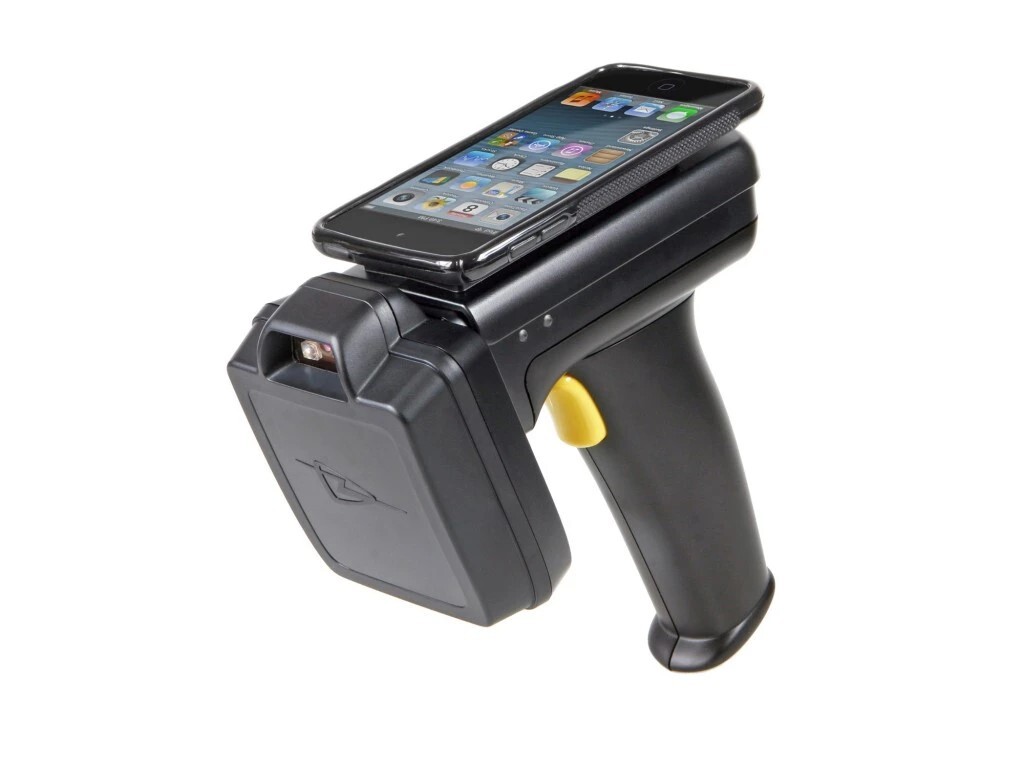
The 1128 is not the newest option, but that does not automatically make it the wrong one. For an existing deployment with spare batteries, cradles, mounts, trained users, and stable app integration, keeping 1128 readers in service may be the simplest path.
Learn MoreBest Fit by Use Case
High-throughput inventory counts -
Start with the 3138. Its newer RFID engine, faster processing, hardware-based tag de-duplication, and support for up to 1,200 tags per second make it the strongest fit when users need to move quickly through dense tag environments.
Longer-range standard-duty applications -
The 2128L may deserve a close look. The TSL comparison guide lists the 2128L at up to 15 meters of read range, compared with up to 9 meters for the 3138 and 1128. Range depends heavily on the tag, item, environment, RF settings, and reader orientation, so this should be tested against your actual use case.
Existing 1128 deployments -
The 1128 may remain a good operational choice when the workflow is already validated. If your team is scanning moderate tag volumes, the application works well, and hardware refresh is not urgent, there may be no reason to upgrade.
Mixed RFID and barcode workflows -
The 3138 is attractive because it includes support for an optional 2D barcode scan engine and Command Scan, which allows users or administrators to configure reader behavior by scanning special 2D barcodes. The 1128 and 2128 models also offer optional 2D barcode imaging, but the 3138’s configuration workflow is more modern.
Read Speed and Range Comparison
Read range is easy to compare on a spec sheet. Read speed and real-world accuracy are harder.
According to our comparison guide, the 1128 offers up to 9 meters of read range, the 2128L offers up to 15 meters, and the 3138 offers up to 9 meters. TSL’s 3138 product page also lists a nominal read range of up to 9 meters and a nominal write range of up to 4 meters in open-field conditions.
| TSL Readers | TSL 1128 | TSL 2128P | TSL 3138 |
|---|---|---|---|
| Read Range | Up to 5.5 m, 18 ft | Up to 9 m, 29.5 ft | Up to 9 m, 29.5 ft |
That does not mean the 2128L is automatically the better reader for every job. Range is only one part of handheld RFID performance. In dense tag environments, the 3138’s newer Impinj E710-based hardware, faster acquisition, and higher processing capability may matter more than maximum open-field distance. TSL lists the 3138’s tag read rate at up to 1,200 tags per second and describes it as better suited for high-density tag environments.
A good rule of thumb:
| Need | Best Model to Evaluate First |
|---|---|
| Fast inventory in dense tag environments | TSL 3138 |
| Maximum listed standard-duty read range | TSL 2128L |
| Existing stable deployment | Same Reader as Currently Using |
| Modern mobile workflow with USB-C, BLE, and newer configuration features | TSL 3138 |
| Simple RFID scan-and-send workflows | 1128, 2128P, or 3138 depending on budget and device compatibility |
Battery and Charging Considerations
Battery life is one of the strongest reasons to evaluate the 3138.

TSL highlights the 3138’s Power Handle as a major upgrade, noting that it provides longer operating time, flexible charging, USB-C or pogo-pin options, and the ability to charge the reader, the reader plus host device when using ePop-Loq mounts, or Power Handles as standalone units. TSL also positions the 3138 as lowering total cost of ownership because the 2128P’s mandatory cradle becomes optional and the battery is designed for longer lifespan through fewer charging cycles.
The comparison guide lists the 3138 with a 3.3-hour charge time using a 45W USB-C PD charger and a preliminary estimate of 25.2 million tag reads per single battery charge. It also lists the 3138 as using a removable Power Handle with either a USB-C connector or 8-way power pins for docking.
For the 1128 and 2128 models, charging is more dependent on model, battery, and cradle configuration. The 1128 uses a high-capacity battery, while the 2128P uses a Power Handle and the 2128L uses high-capacity battery. The comparison guide lists charge times of 2.5 hours for the 1128 and 2128P, and 5 hours for the 2128L.
For teams running long shifts, shared devices, or back-to-back inventory cycles, charging logistics may matter as much as raw read range. A reader that fits the shift without battery swaps usually wins.
Subscribe to Keep Learning About RFID
Ready to start your RFID learning journey? Subscribe to our once a month newsletter to see new articles, new products, and receive special promotions.
Mobile Device Compatibility
All three reader families are designed to work with mobile devices, but the 3138 is built around newer connection expectations.
All TSL devices are compatible with Android, iOS, Windows, macOS, Bluetooth, and RAIN RFID workflows. TSL lists support for Bluetooth SPP, HID, Apple iAP2, and BLE, along with USB CDC support for Windows, Linux, Mac, and Android hosts.
The comparison guide lists the 3138 with Bluetooth 5.1 compatibility, Bluetooth 4.2 compliance, Classic, BLE, and iAP2 support. It also lists the 2128P with Bluetooth 4.2 and Classic, BLE, and iAP2 support, while the 1128 is listed with Bluetooth 4.2 and the same broad support set.
Mounting is another practical factor. The 3138 and 2128 models use ePop-Loq mounts, while the 1128 uses slide-on mounts. If your users attach phones or handheld terminals directly to the reader, check mount availability for your exact host device before choosing a model.
App and Workflow Considerations
The reader is only one part of the system. Your app, data flow, and user process will decide whether the hardware feels smooth or frustrating.
The 3138 gives developers and operations teams more room to build efficient workflows. TSL’s ASCII Protocol 3.0 supports faster application development and lets multiple tag operations run locally through pre-configured commands. TSL also notes that the 3138’s Command Scan feature can configure reader parameters by scanning special 2D barcodes, including barcodes sent through emails or apps for remote configuration.
That matters in real deployments. A warehouse supervisor may need one scan profile for cycle counting and another for locating a specific asset. A field team may need to update reader settings without connecting to a PC. A support team may need a faster way to standardize settings across many readers. Command Scan gives the 3138 a clear advantage in those situations.
The 1128 and 2128 still support reliable RFID workflows, especially where an app has already been built and tested around those models. For many companies, the right question is not “Which reader has the newest spec sheet?” It is “Which reader fits the workflow with the least friction?”
When to Choose the TSL 3138
Choose the TSL 3138 when you want the best long-term platform for a new standard-duty handheld RFID deployment.
It is the strongest fit when you need faster tag acquisition, higher tag throughput, better performance in dense RFID environments, modern Bluetooth options, USB-C charging, flexible docking choices, updated mobile device support, and newer configuration tools. It is also a good fit when your team wants to standardize on a reader that can support both RFID and barcode-driven workflows.
The 3138 makes the most sense for:
| Scenario | Why the 3138 Fits |
|---|---|
| New handheld RFID deployments | Newer platform with modern connectivity and workflow features |
| Dense tag environments | Faster acquisition and up to 1,200 tags per second |
| Long shifts | Power Handle and improved operating time |
| Mobile-first workflows | Android, iOS, Windows, macOS, BLE, HID, SPP, and iAP2 support |
| Remote or field configuration | Command Scan configuration by 2D barcode |
| Mixed RFID and barcode use | Optional 2D barcode engine |
| Teams planning for growth | Higher processing capability and newer hardware |
If you are buying handheld RFID readers for a new deployment, the 3138 should usually be the first model you evaluate.
When Another TSL Model May Still Make Sense
The 3138 is not the automatic answer for every business.
The 2128P may still be worth considering when listed read range is the top requirement. Its up-to-15-meter range gives it an advantage on paper for certain standard-duty applications where distance matters more than newer workflow features.
The 2128 may also make sense when your organization already owns compatible accessories, has approved workflows, or wants to keep user training and support simple.
The 1128 may still be a practical option for legacy environments. If your team already uses 1128 readers and the current workflow is accurate, stable, and supported, a direct replacement or phased migration may be more sensible than a sudden platform change.
In other words, do not frame the decision as “old versus new.” Frame it around workflow:
- Can users scan everything they need to scan?
- Does the battery last through the workday?
- Does the reader fit the mobile device?
- Can the app handle the scan volume?
- Will your team need barcode scanning, batch mode, remote configuration, or fast tag de-duplication?
Those answers will point you toward the right model.
Final Recommendation
For most new handheld RFID projects, start with the TSL 3138. It gives you the newest hardware platform, strong RFID throughput, better mobile workflow support, flexible charging, and useful field configuration tools.
Choose the 2128P when maximum listed read range is a key requirement and the rest of the workflow fits. Keep the 1128 in the conversation when you are supporting an existing deployment or need a familiar standard-duty reader for straightforward RFID scanning.
The best way to choose is to test the reader against your real tags, real environment, real mobile device, and real users. Spec sheets narrow the field. Workflow testing makes the decision.
View Comparison GuideFAQs
Is the TSL 3138 better than the TSL 2128?
The TSL 3138 is newer and offers faster tag acquisition, updated internal hardware, modern Bluetooth support, USB-C charging, Command Scan, and improved workflow features. The 2128P may still be a better fit when maximum listed read range is the top priority.
Which TSL reader has the longest read range?
In the TSL comparison guide, the 2128P is listed with up to 15 meters, or 49 feet, of read range. The 3138 and 1128 are both listed with up to 9 meters, or 29.5 feet. Actual read range depends on tags, tagged items, environment, reader settings, and orientation.
Should I upgrade from a TSL 1128 to a TSL 3138?
Consider upgrading if you need faster scanning, newer mobile device support, better battery and charging options, higher tag throughput, or newer workflow tools. If your 1128 deployment is stable and meets your current scan requirements, a phased approach may make more sense.
Does the TSL 3138 support barcode scanning?
Yes. The TSL 3138 supports an optional 2D barcode scan engine and can also use Command Scan to configure reader settings by scanning special 2D barcodes.
Which TSL reader is best for a new RFID deployment?
For most new standard-duty handheld RFID deployments, the TSL 3138 is the best starting point because it offers the newest hardware platform, strong RFID performance, updated connectivity, flexible charging, and modern workflow features.