
Reducing Specimen Labeling Errors: A Practical Use Case for RFID in the Lab
Accuracy in the clinical lab is critical. Every specimen represents a patient, a diagnosis, and a treatment decision. Even small labeling errors can lead to delayed results, repeat testing, or incorrect outcomes that affect patient care.
Despite advances in healthcare technology, specimen labeling and tracking still rely heavily on manual processes. Barcodes have improved accuracy, but gaps remain when specimens move through multiple steps and locations. RFID adds another layer of visibility and traceability that can help labs reduce errors, strengthen chain of custody, and improve workflow reliability.

- Why Specimen Labeling Errors Occur
- How RFID Improves Specimen Tracking
- Supporting Accuracy from Collection to Analysis
- Reducing Delays and Rework
- Improving Confidence in Lab Data
- The Role of RFID Readers in Lab Workflows
- A Practical Step Toward Safer Lab Operations
- Explore RFID for Lab Labeling Workflows
Why Specimen Labeling Errors Occur
Specimen errors are rarely caused by a single failure. More often, they happen when several small issues occur across collection, transport, processing, and storage. In a busy lab setting, even minor breakdowns in labeling or handoff procedures can create larger downstream problems.
Common causes of labeling and tracking issues include:
- mislabeled or partially labeled specimens
- unreadable labels caused by moisture, abrasion, or chemical exposure
- manual entry mistakes during collection or accessioning
- difficulty locating specimens as they move between departments
- missed scans or inconsistent verification during handoffs
In high-volume environments, staff may process hundreds or even thousands of specimens in a day. When identification depends heavily on manual checks, the likelihood of error increases, especially during peak periods or across multi-step workflows.
When a specimen cannot be confidently identified or located, the consequences can include retesting, delayed diagnoses, disrupted workflows, and added stress for both staff and patients.
How RFID Improves Specimen Tracking
RFID improves specimen tracking by assigning each sample a unique identifier that can be read automatically without direct line-of-sight scanning. As specimens move through collection, transport, processing, and storage, RFID readers can capture their presence and location at key points along the way.
This added visibility helps labs verify that specimens are where they should be, when they should be there. It also reduces reliance on staff having to manually scan every item at every handoff, which can be difficult to maintain consistently in fast-moving environments.
RFID can support lab workflows by helping teams:
- confirm specimen movement between stages
- identify missing or delayed samples sooner
- improve traceability across departments
- reduce dependency on repetitive manual verification
- strengthen confidence in chain-of-custody records
RFID does not replace barcode systems. Instead, it complements them by adding automated tracking in areas where manual verification may be less consistent or harder to maintain.
Supporting Accuracy from Collection to Analysis
At the point of collection, clear and durable labeling is essential. Labels need to remain readable throughout transport and processing, even when exposed to refrigeration, moisture, chemicals, or frequent handling. If a label degrades at any point in the workflow, the risk of delays and identification errors increases.
Using dependable printing solutions helps create more consistent results from the start. Zebra industrial printers such as the ZT421 are built for high-volume label production, making them a strong fit for lab environments where uptime, print quality, and reliability matter. Consistent printing helps reduce avoidable issues tied to poor readability or inconsistent label output.
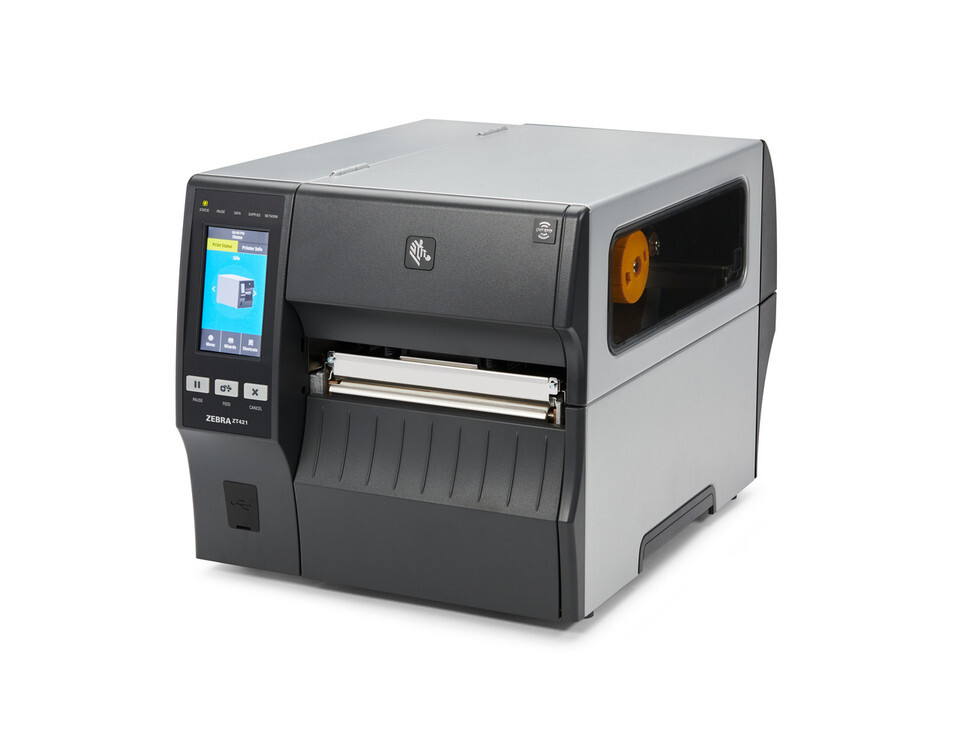
Zebra media supplies are also designed for demanding healthcare conditions, helping labels maintain readability throughout the specimen lifecycle. When paired with RFID-enabled labels, that durability supports accurate identification and more reliable tracking from collection through analysis.
Reducing Delays and Rework
One of the biggest impacts of specimen labeling errors is lost time. When a specimen cannot be verified or located, lab staff often need to stop what they are doing to investigate. In some cases, samples must be recollected, which delays results, increases rework, and creates a poorer experience for patients.
RFID helps reduce these interruptions by making specimen movement more visible in real time. If a sample is delayed, misplaced, or missing from an expected location, staff can identify the issue earlier and take action faster. That can help labs reduce unnecessary follow-up work and maintain more predictable turnaround times.
Improving Confidence in Lab Data
Accurate specimen tracking also supports stronger data integrity. When lab information systems receive more reliable status and location updates, reporting becomes more accurate, more consistent, and easier to audit.
This visibility can support:
- compliance and documentation requirements
- internal quality control efforts
- root cause analysis for workflow issues
- identification of bottlenecks and inefficiencies
- long-term process improvement initiatives
Over time, better tracking can give labs a clearer picture of where breakdowns occur and where workflow improvements can have the greatest impact.
The Role of RFID Readers in Lab Workflows
RFID readers play an important role in capturing specimen data without adding unnecessary steps for staff. Fixed readers can monitor movement through key transition points, while handheld readers can support audits, exception handling, and targeted searches for missing items.
This combination gives labs more flexibility in how tracking is applied across the workflow. Fixed infrastructure can automate visibility in high-traffic areas, while handheld devices give staff a practical tool for responding to issues as they arise.
Zebra RFID readers are designed to perform reliably in healthcare environments and can be integrated into existing lab workflows with minimal disruption. When implemented thoughtfully, these readers help capture data passively, reduce manual burden, and improve visibility without requiring staff to change every part of their process.

A Practical Step Toward Safer Lab Operations
Specimen labeling accuracy is essential to patient care. RFID offers a practical way to strengthen existing processes by improving visibility, reducing manual effort, and supporting more consistent tracking from collection to analysis.
For labs looking to reduce errors, improve traceability, and build more confidence into day-to-day workflows, RFID can be a valuable addition to an established barcode system. Rather than replacing current processes, it helps close visibility gaps that can be difficult to address through manual checks alone.
Explore RFID for Lab Labeling Workflows
If your lab is looking for ways to improve specimen visibility and reduce labeling risk, RFID may be worth exploring as part of a broader identification strategy. The right combination of printers, media, labels, and readers can help support more reliable workflows without requiring a complete process overhaul.
Atlas RFID can help you evaluate the pieces involved and determine what makes sense for your environment, whether you are refining an existing labeling process or considering RFID for the first time.