
The Building Blocks of a Modern Hospital: An Introduction to RFID and Barcode Technology
Hospitals depend on accurate information to operate efficiently. From patient identification to supply tracking, the ability to capture and access data quickly plays a critical role in both operational performance and patient care. Barcode and RFID technologies are foundational tools that support this work across modern healthcare environments.
While these technologies are often discussed together, they serve different purposes. Understanding how barcodes and RFID function—and where each is most effective—helps hospitals build systems that are practical, scalable, and reliable.
Understanding Barcode Technology in Healthcare
Barcodes have long been a staple of hospital operations, offering a simple and cost-effective way to identify items, patients, and locations with a high degree of accuracy.
In healthcare settings, barcodes are commonly used for:
- Patient wristbands
- Medication administration
- Specimen identification
- Asset labeling
A barcode must be scanned directly, ensuring intentional interaction and confirmation at the point of care.
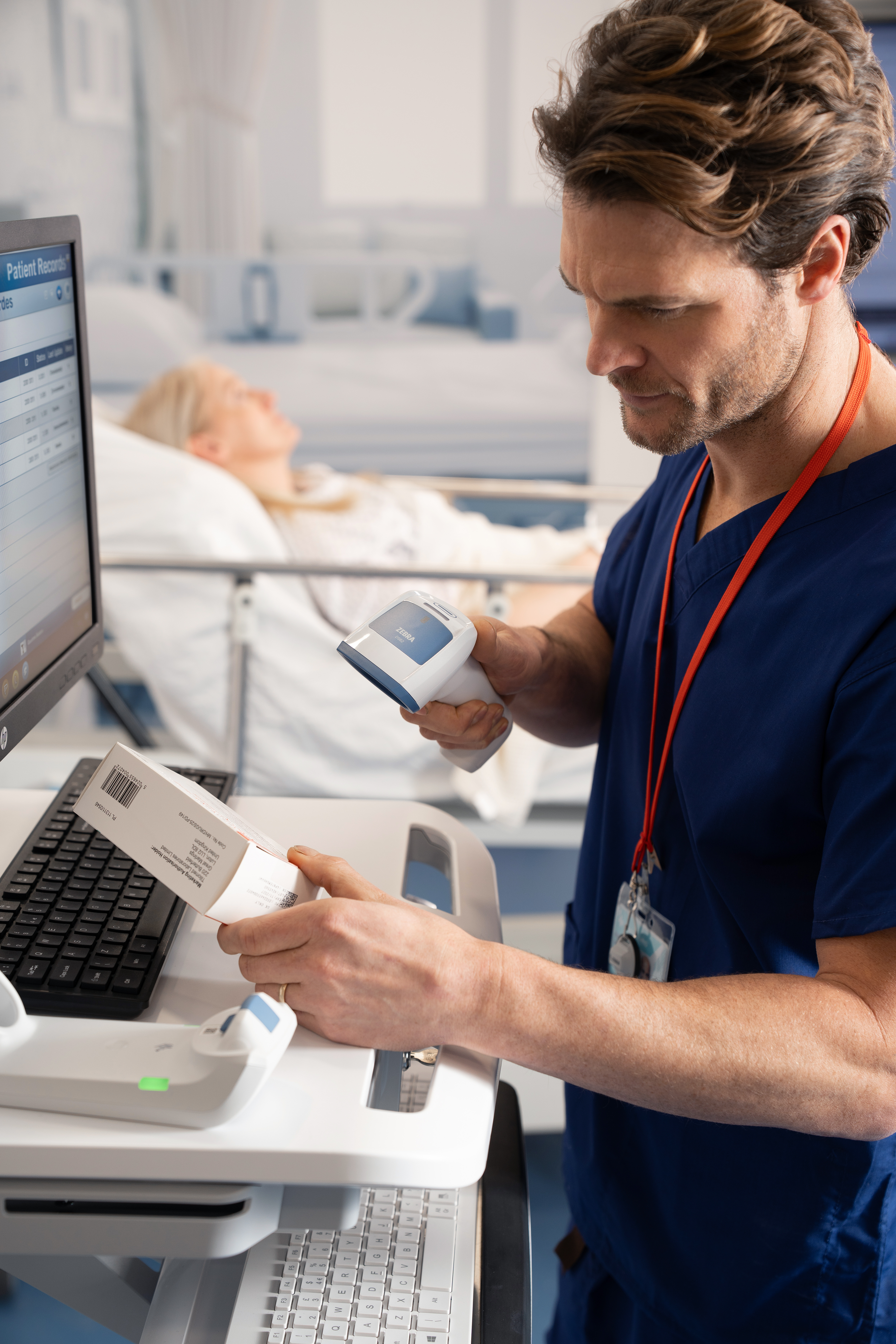
Barcode workflows are especially effective where verification is critical. For example, scanning a patient wristband before administering medication adds an essential safety check into clinical workflows.
Mobile devices play a key role in making barcode scanning efficient. Devices like Zebra mobile computers allow clinicians and staff to scan barcodes at the bedside, in supply rooms, or on the move—without interrupting care delivery.
Where RFID Fits into Hospital Operations
RFID offers a different approach to data capture. Instead of requiring line-of-sight scanning, RFID tags can be read automatically and in bulk.
This makes RFID especially useful in scenarios where speed and visibility are priorities, including:
- Inventory tracking across departments
- Monitoring high-value assets
- Managing supplies across multiple storage locations
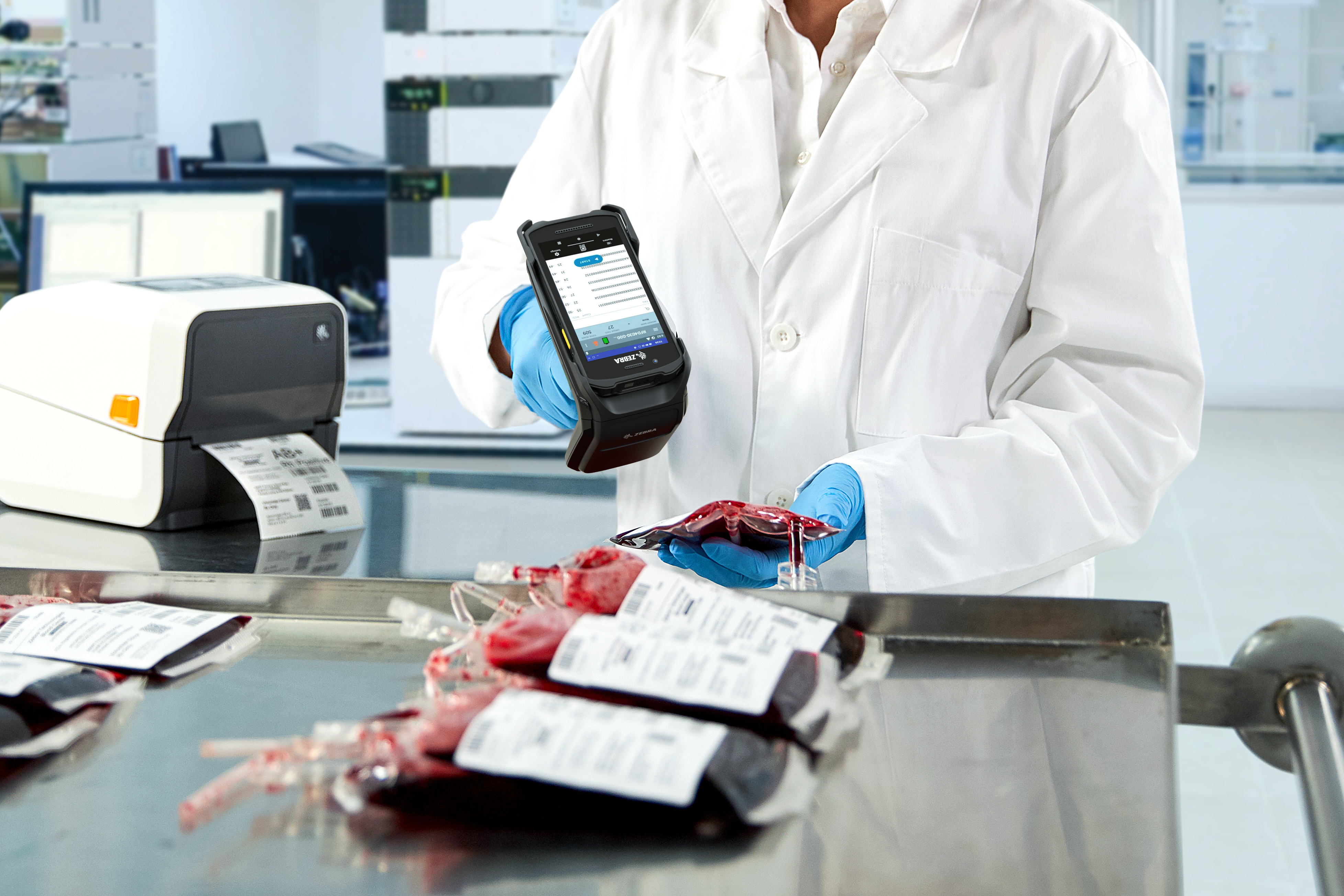
RFID readers can capture data from many tagged items at once, significantly reducing the time required for manual counts.
This capability makes RFID a strong fit for inventory management, where frequent and accurate counts are necessary—but manual processes are disruptive or inconsistent.
Using Both Technologies Together
A common misconception is that hospitals must choose between barcodes and RFID. In reality, most modern healthcare environments benefit from using both.
Each technology plays a distinct role:
- Barcodes → Best for workflows requiring direct interaction and confirmation
- RFID → Best for automation, speed, and broad visibility
By combining the two, hospitals can align each technology with the tasks it supports best—maximizing efficiency without adding unnecessary complexity.
Supporting Inventory Workflows with Mobile Technology
Inventory management is one area where barcode and RFID technologies naturally work side by side.
Staff may:
- Use barcodes to identify individual items
- Use RFID for rapid inventory checks and ongoing visibility
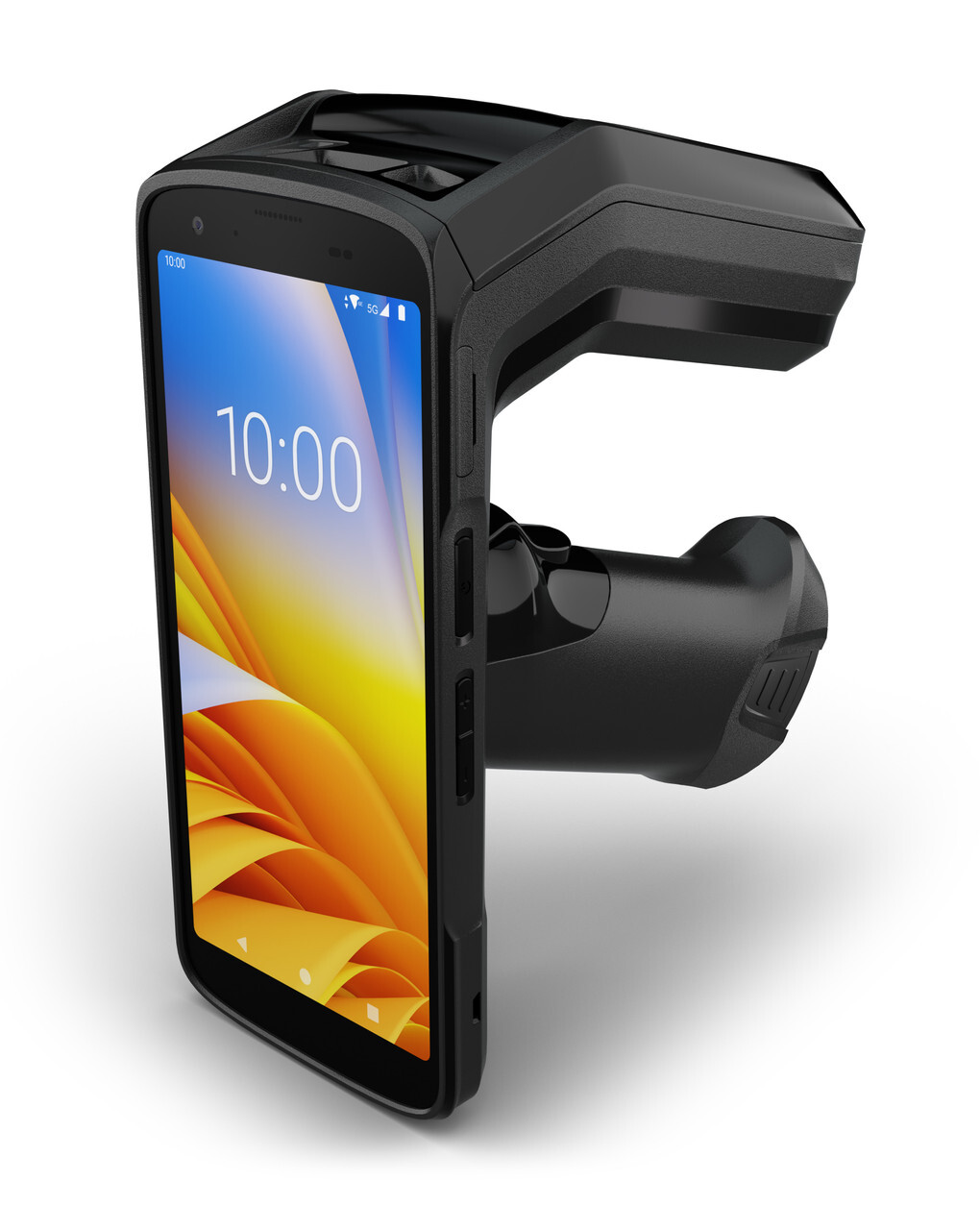
Devices such as the Zebra TC22R support quick inventory tasks without requiring specialized equipment or extensive training.
These tools enable:
- Faster routine inventory checks
- More consistent data capture
- Reduced disruption to daily operations
The result is improved visibility without adding friction to existing workflows.
Building a Scalable Foundation
As hospitals evolve, their data capture needs to expand. New service lines, regulatory requirements, and care models introduce additional complexity. Technologies that scale alongside these changes provide long-term value.
To support growth, hospitals should prioritize:
- Standards-based systems
- Flexible implementation approaches
- Reliable, interoperable hardware
This ensures compatibility with future systems while maintaining operational consistency.
Designing the Right Approach with Atlas RFID
Implementing barcode and RFID technology isn’t about choosing one over the other—it’s about applying each where it delivers the most value.
Atlas RFID works with healthcare organizations to:
- Evaluate existing workflows
- Identify high-impact opportunities for RFID and barcode use
- Design systems that balance accuracy, efficiency, and scalability
The result is a practical, tailored approach to data capture that supports both operational performance and patient safety.
Talk to an RFID specialist about exploring healthcare RFID solutions.